
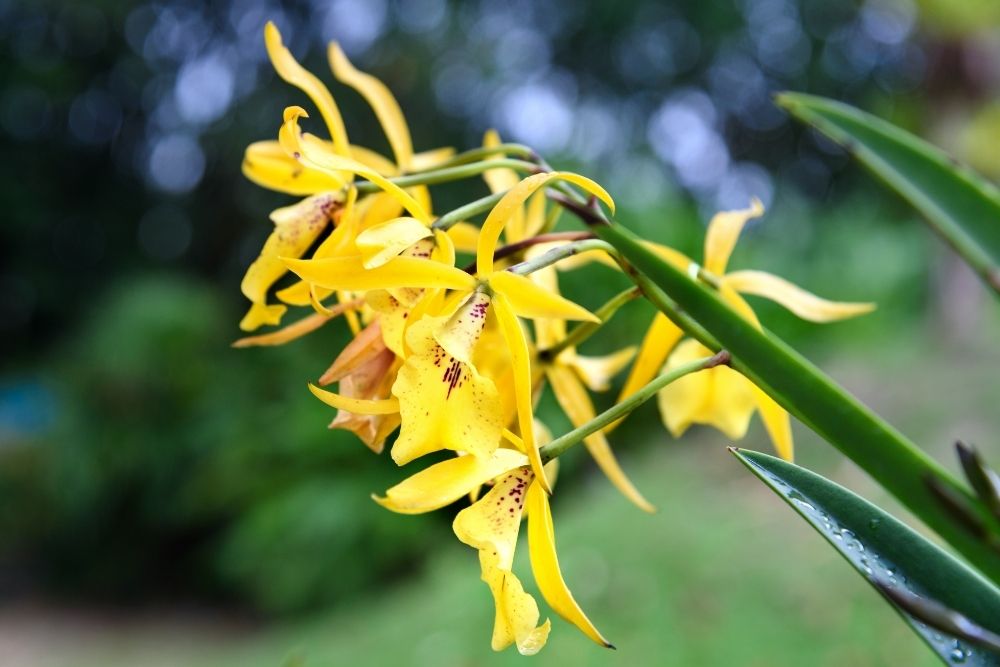

If orchids have won you over, you are in good company. These intricate, beautiful plants look almost too perfect to be real. Some are bold and showy, while others stay understated and delicate.
Orchids come in countless forms, and no two are quite alike.
In this article, we will explore 11 different orchid types and get to know each one a little better.
So, without further delay, here is the list:
Daddy-Long-Legs Orchid – Brassavola
As the name hints, this orchid sends out long tendrils from the flower. That is where the nickname comes from, since they resemble spider legs, yet the bloom itself is genuinely striking.
They may not be the brightest blooms around, but their intricate detail makes them a winner and takes nothing away from their beauty.
Place Of Origin:
These flowers are native to the West Indies, South America, and Central America.
Color Variations:
This orchid appears in pink, orange, yellow, and white, along with blends such as yellow and pink or white and purple, plus several other combinations.
Preferred Conditions:
These orchids enjoy high humidity, so water only once they begin to dry out. They can be quite particular about temperature and humidity, so be sure you understand how to care for your tailed orchid.
They are not the best choice for beginners, since they can be extremely fussy about the exact conditions needed to thrive.
Tailed Orchid – Masdevallia
This flower has a curious shape next to other orchids. Still, that unusual, atypical petal form adds to the tailed orchid’s flair and makes it all the more appealing.
Place Of Origin:
The tailed orchid is native from Mexico down to Brazil
Color Variations:
This orchid type appears in green and white
Preferred Conditions:
Water these flowers regularly, letting the soil dry out between waterings. When it is cold, water around the edge of the pot so the plant does not become too wet and cold.
These orchids enjoy a little direct sunlight, on the stronger side.

Moth Orchid – Phalaenopis
This orchid is a gorgeous pink, peach, and yellow bloom that flowers many times across the year. It is a striking, vibrant flower guaranteed to brighten any room.
Place Of Origin:
This flower comes from parts of Asia and Australia and is native to Taiwan, China, New Guinea, and Australia.
Color Variations:
This flower appears in shades ranging from red-purple and violet to violet-blue, purple, and purple violet.
Preferred Conditions:
This plant prefers indirect or shady light, since direct sun can scorch the leaves, so keep it away from radiators, heaters, and fireplaces.
Water only when the soil is mostly dry, and every one to two weeks should be enough for the Moth Orchid to thrive.
Dancing-Lady Orchid – Oncidium
This charming little orchid has a unique shape, with petals that almost resemble a dancing woman, which is where the common name comes from. It is beautiful and loves to stand out with bright colors and intricate petals.
Place Of Origin:
These flowers are native to Mexico and the Caribbean, though their range can stretch from Florida all the way to South America.
Color Variations:
These flowers are most often golden yellow with red or brown spots on the petals, and other combinations such as pink and white carry the same spots and sections.
Preferred Conditions:
These orchids like warmth and humidity. They usually grow in trees and are more tolerant of dry conditions. Water them roughly every 10 days, depending on how dry the soil is.
Swan Orchid – Cycnoches
As the name suggests, this orchid is shaped a little like a swan and is nearly as elegant and beautiful. It is a truly delightful little flower that comes in a range of colors and is sure to make you smile if you ever see one.
Place Of Origin:
They are native to South America, Central America, and Mexico
Color Variations:
The swan orchid usually appears in yellow, white, pink, and green.
Preferred Conditions:
These orchids prefer warm or intermediate temperatures, and in those conditions they should bloom without trouble. They need a chance to dry out before you water them again.
There is a particular method for watering them correctly so they thrive. Because of that, it is worth noting that they are not the best plant for beginners to keep.
Venus Slipper – Paphiopedilum
This orchid goes by several common names, Venus slipper and lady’s slipper, both from the same genus. These flowers are cheerful and intricately built, and their colors and appearance are truly spectacular.
Place Of Origin:
This plant is native to Southern China, Southeast Asia, and New Guinea.
Color Variations:
These flowers also come in many different colors: white and green, deep purple and light purple, pale orange and peach. There are countless combinations available for this orchid type.
Preferred Conditions:
Unlike many other orchids, the Venus slipper loves cool nighttime air. It can tolerate heat only when watered regularly and kept in a humid environment.
Greater Swamp Orchid – Phaius
These charming hanging orchids are stunning to behold, vibrant and shaped almost like a star. They carry several common names: greater swamp orchid, swamp lily, swamp orchid, nun’s-hood, and veiled orchid.
If you can manage their care, they make a fantastic plant to keep around your home.
Place Of Origin:
These tropical orchids are native to Africa, the Pacific Islands, and Australia.
Color Variations:
The greater swamp orchid comes in numerous colors, with pink, brown, yellow, white, and orange being the most common.
Preferred Conditions:
These flowers can be picky: they need well-drained soil, must stay consistently moist without being overly wet, and enjoy warmer temperatures. They are not easy to care for, since they require very specific conditions to survive.
Butterfly Orchid – Psychopis
These orchids are less popular than others, but they deserve more attention: they are stunning little flowers, flashy and pretty to look at, and they come in a range of colors.
Place Of Origin:
These flowers come from Trinidad, South America, and Central America.
Color Variations:
These flowers may show spotted or patchy patterns and typically appear in yellow, red, pink, or orange.
Preferred Conditions:
Since this flower comes from a tropical climate, it needs heat and humidity to thrive. It can be a fussy plant if the temperature and humidity are not just right.
Vanda Orchid
This orchid is also called the gray or checkered vanda. It is a vibrant, brightly colored orchid sure to take your breath away. Its intricate pattern and colors really make it pop.
Place Of Origin:
This flower is native to New Guinea, Southeast Asia, and Eastern Asia.
Color Variations:
This orchid typically appears in pink, yellow, white, green, burgundy, and even purple.
Preferred Conditions:
These orchids prefer warmer temperatures but can handle short cold spells when there is little wind. They need frequent watering, up to twice a day when it is very hot.
Zygopetalum Orchid
These fragrant flowers are gorgeous, brightly colored with a delicate set of petals that is amazing to see. They are well known for their spotted markings and the wide variety of patterns they display.
Place Of Origin:
These flowers are found mostly in Brazil but have also been seen in other parts of South America.
Color Variations:
These flowers come in brown, white, green, and purple, and should show spotted or dappled markings on the petals.
Preferred Conditions:
These flowers need a bright spot in your home so they get all the light required to thrive. Water them about every nine days, once the soil is almost dry.
Corsage Orchid – Cattleya
This orchid is also called the queen of orchids, and it is easy to see why. The plant is truly stunning. Its frilled petals and colors really make it stand out among the rest.
There are many hybrids of this orchid type, which leads to a wide range of colors, petal patterns, and shapes.
Place Of Origin:
These orchids are native to South America and Central America
Color Variations:
The Corsage orchid comes in the following colors: orange, purple, yellow, and pink.
Preferred Conditions:
These enjoy both day and night temperatures and need a good amount of sunlight to grow. Water this orchid type only once the soil is dry, roughly once a week.
Conclusion
There are more than 25,000 orchid species in the world and well over 100,000 hybrids in existence. They appear in nearly every region of the world and are always a splendid sight. Given the huge variety of orchids, a list like this can only cover so much. Still, hopefully the few we have seen today have sparked some love for this variety of flowers and might inspire you to go and buy one of your own.

Plants have always been a big interest of mine, and I’ve always wanted to learn more about the different types of species. I have gained a vast knowledge of the subject over the years, and I have decided to share this information with others.
- 10 Types Of Rose Plants - January 21, 2026
- 10 Types Of Pink Plants - January 21, 2026
- 15 Types Of Mint Plants - January 21, 2026